Dungeness Crab
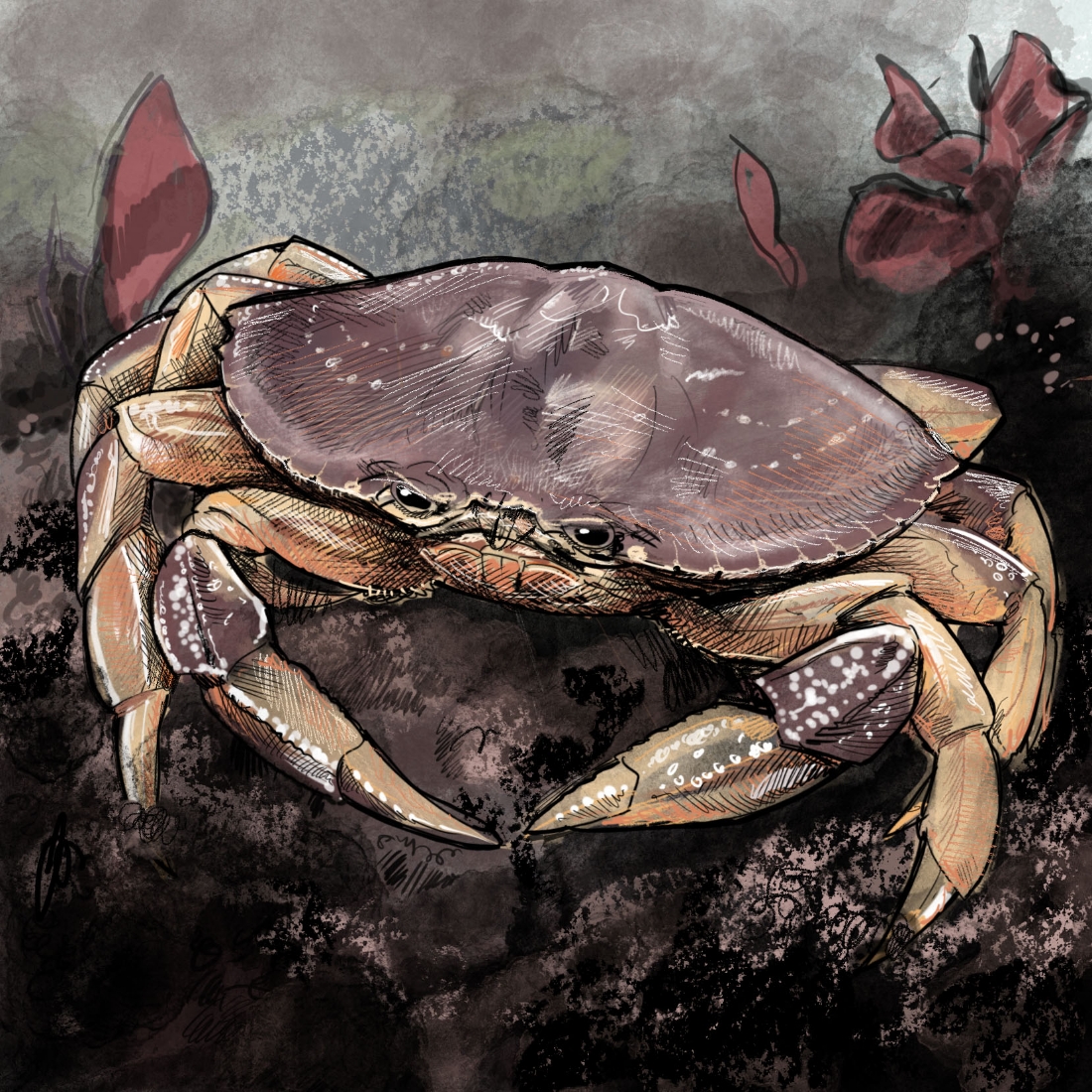
Dungeness crab range from the Aleutian Islands, Alaska, to south-central California. They live on soft, sandy and muddy ocean floor from the intertidal zone to over 1500 feet. Female Dungeness crab can live to be 8-12 years old, while males caught in the fishery are four to five years old. Male Dungeness crab grow up to 10 inches wide, but on average are 6-7 inches wide, and females are smaller than males. They grow through a process called molting, when they shed their outer hard shells, and the soft inner shell expands and hardens to be larger than the old one. Dungeness crab use their claws to gather and crush prey, and smaller appendages to pass the food particles into their mouth. They have a collection of tooth-like structures within their stomach that aid digestion by further crushing and grinding food. They are scavengers and prey on clams, other crustaceans and small fish. Natural predators of Dungeness crab include various species of large fish and marine mammals such as sea otters and sea lions.
Overall availability
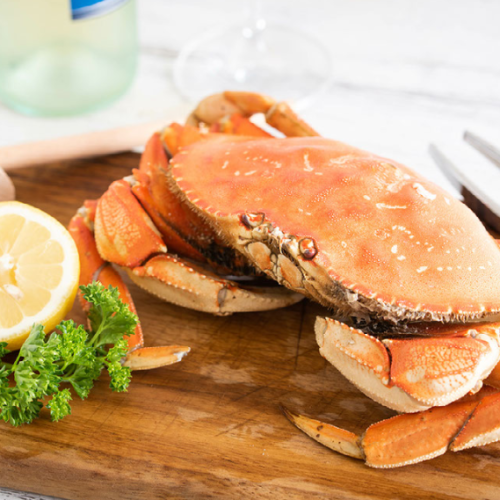
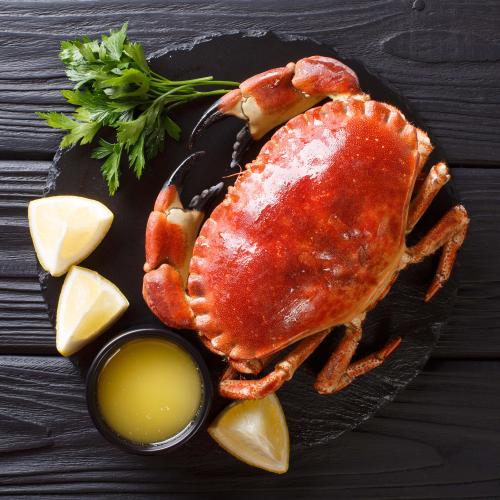
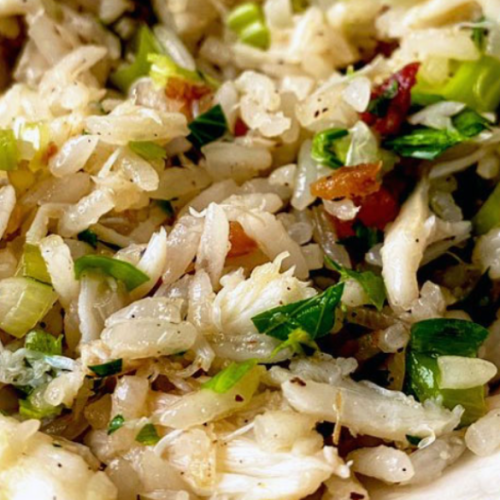
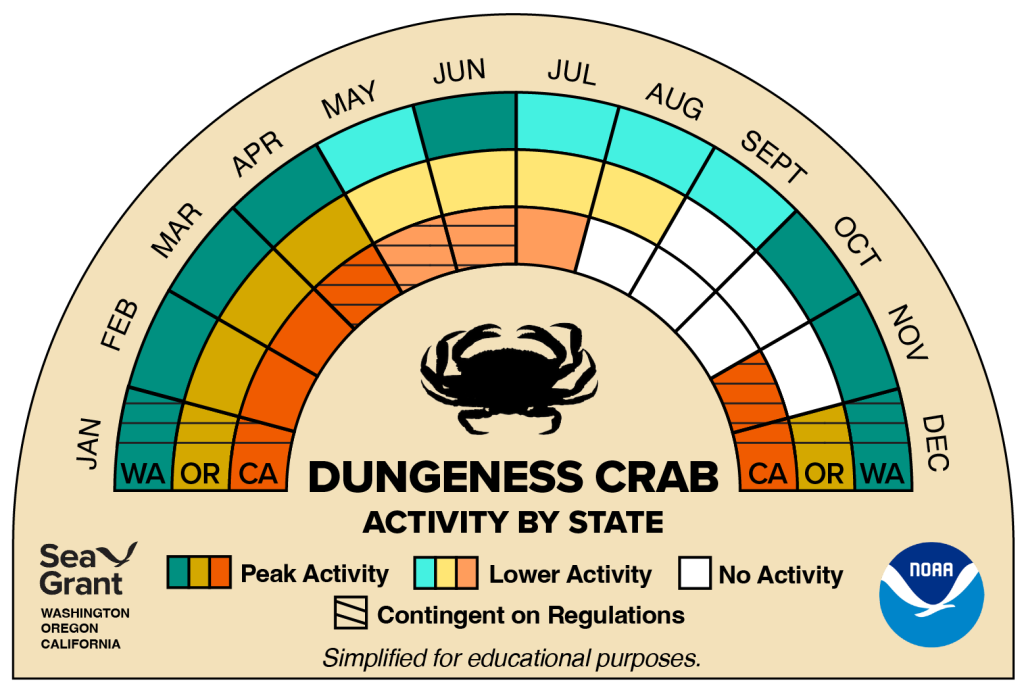
Dungeness crab is fished in all three West Coast states, California, Oregon and Washington. Peak availability varies by geographic region but is generally from late fall through early summer. Dungeness crab is available in a variety of product forms including live, fresh and frozen. It can also be found cooked (shell-on) whole, or cooked as sections or picked meat which is often canned.
Management
Dungeness crab is fished commercially using baited traps called pots. The West Coast Dungeness crab fisheries are managed by each state: California, Oregon; Washington's coastal and Puget Sound fisheries are co-managed by Washington state and Treaty Tribes. The Pacific States Marine Fisheries Commission, a non-regulatory entity, facilitates the Tri-State Dungeness Crab process where the three state's management activities for this species are coordinated.