Pacific Halibut
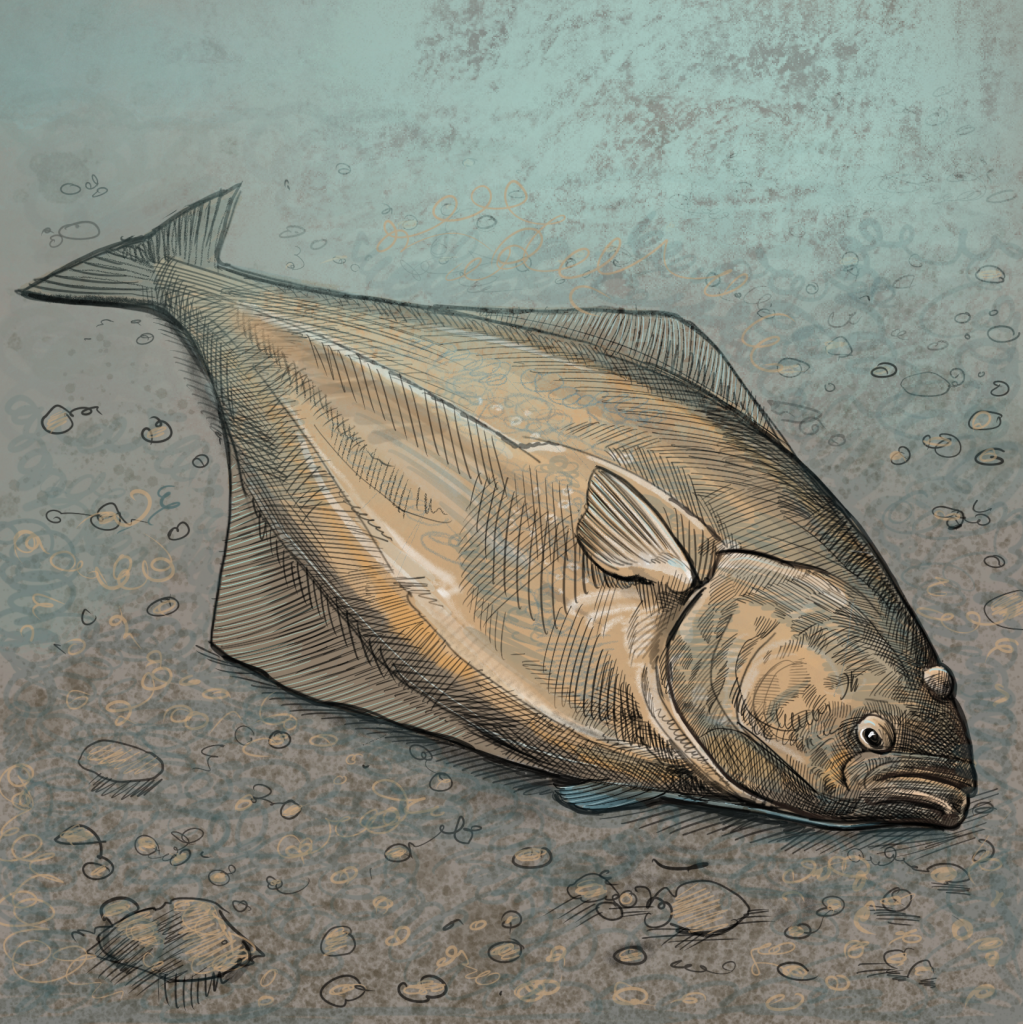
Pacific halibut are one of the world's largest flatfish, reaching up to eight feet in length and weighing up to 500 pounds. They are primarily found along the West Coast from the Bering Sea in Alaska to Santa Barbara, California and prefer sandy habitats. As Pacific halibut mature, their left eye migrates to the right side of their body, allowing the fish to lie flat on the seafloor with both eyes facing upward. As ambush predators, their blotchy coloration enables them to be camouflaged and they remain still before suddenly striking their target. They commonly prey upon smaller fish such as sculpin or herring, as well as crabs, clams, octopus, squid and occasionally smaller halibut. Their large body size provides some protection from predators, which are typically limited to sharks and marine mammals.
Overall availability
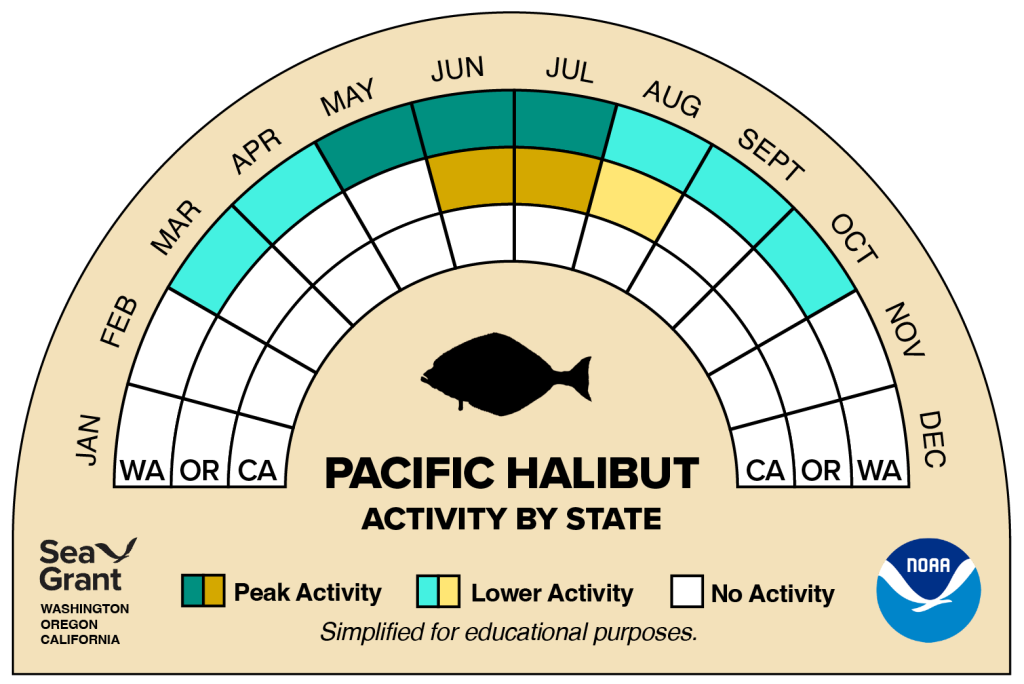
Pacific halibut are fished in all three West Coast states, California, Oregon and Washington. However, harvest in California is minimal and only occurs on the north coast. Peak availability varies by geographic region in Oregon and Washington, but is generally in late spring to summer. Halibut is available fresh filleted or portioned while in season and frozen year round.
Management
Pacific halibut is commercially fished using longline gear. Indigenous peoples have fished and managed the harvest of Pacific halibut for millennia. Since 1924, the commercial Pacific halibut fishery has been managed through a collaboration of many entities including state Departments of Fish and Wildlife (CA, OR, WA), Tribes, NOAA Fisheries, the Pacific Fishery Management Council and the International Pacific Halibut Commission. Together, each year, they determine and distribute catch quotas among Treaty Tribes, US states, and Canadian provinces.