Purple Sea Urchin
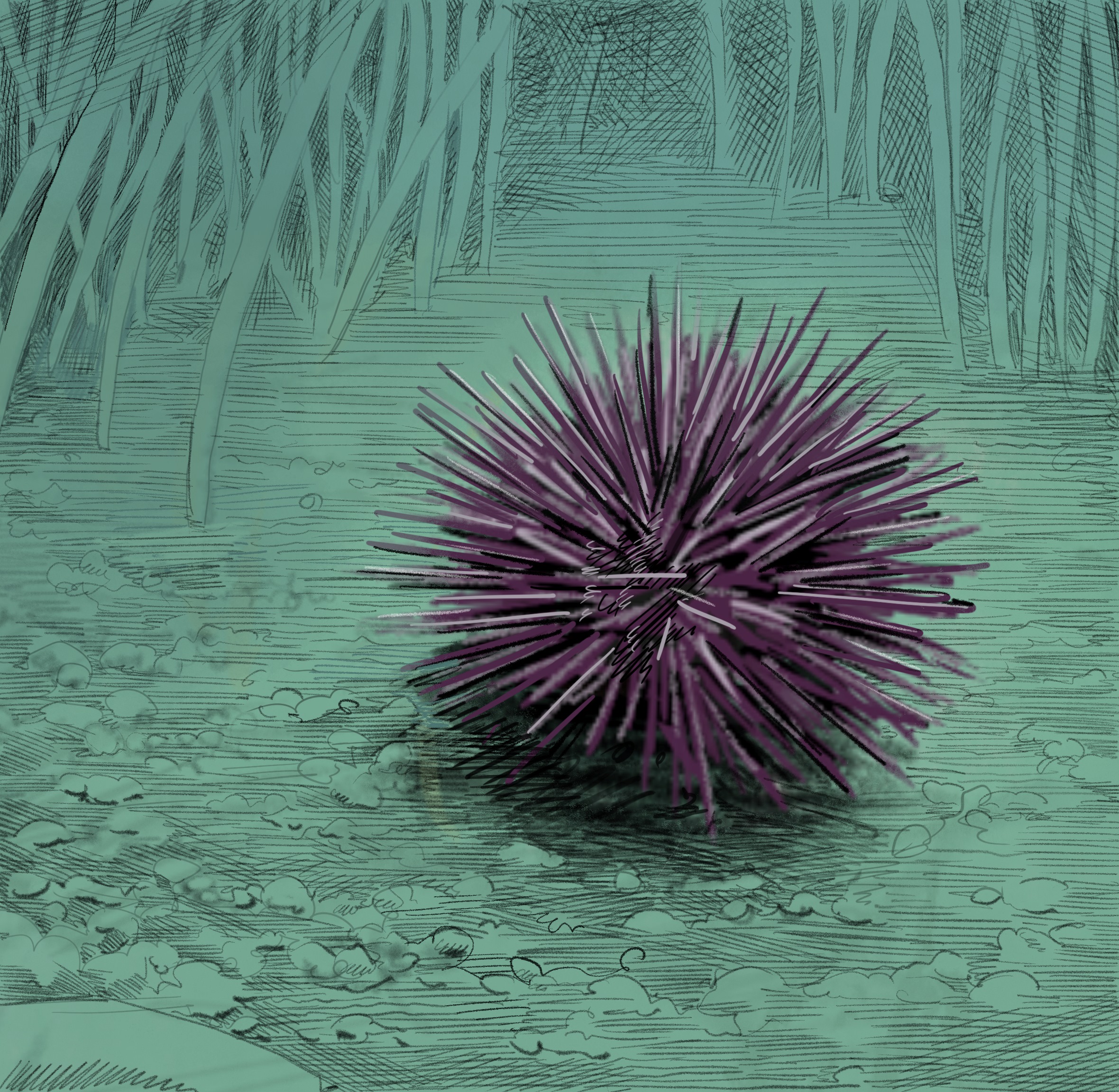
Purple sea urchins are invertebrates commonly found along the West Coast from Alaska to Baja California. They are covered in protruding spines and are smaller than red sea urchins, rarely exceeding four inches in diameter.They live in shallow waters and are abundant in intertidal areas throughout California. Purple sea urchins primarily feed on seaweed such as giant kelp and bull kelp, and are preyed upon by spiny lobster, sheephead, sea otters, and sunflower sea stars. Since an outbreak of sea star wasting disease in 2014 and other factors, the sunflower sea star population has declined dramatically, and the purple sea urchin population has expanded significantly. This has lead to purple sea urchin barrens, areas with high numbers of urchins and little to no kelp because the urchins have consumed it all.
Overall availability
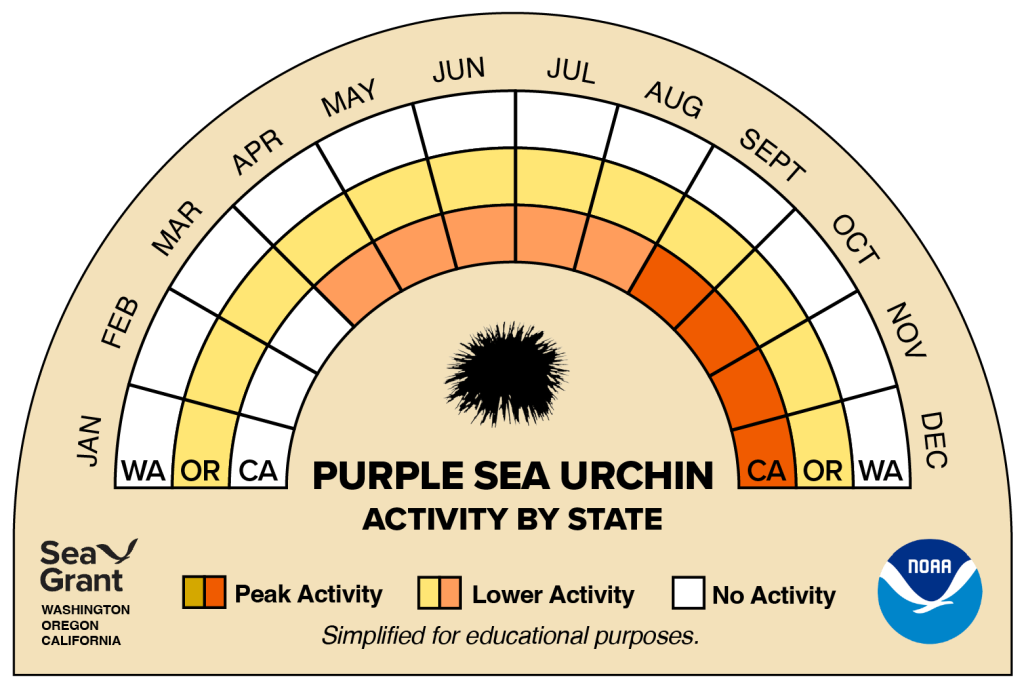
Purple sea urchins are commercially fished primarily in California, with a very small amount of activity in Oregon. Similar to the red sea urchin fishery, purple sea urchins are harvested for their ‘roe’ (known as ‘uni’ in Japan) which is eaten fresh. Wild harvest occurs mainly in California in late summer to early fall. However, purple sea urchins may be found locally other times of the year if urchin ranching occurs in the area (see next section).
Management
Purple sea urchins are hand-harvested by commercial divers. The fishery in Oregon is focused mostly on ranching, where the urchins are harvested by divers and then fattened up in aquaculture tanks before being sold to consumers. In California, purple urchins are sold seasonally directly after being harvested by divers, and year-round as farmed (ranched) product. Each state Department of Fish and Wildlife (CA, OR) independently manages the fishery for their state.