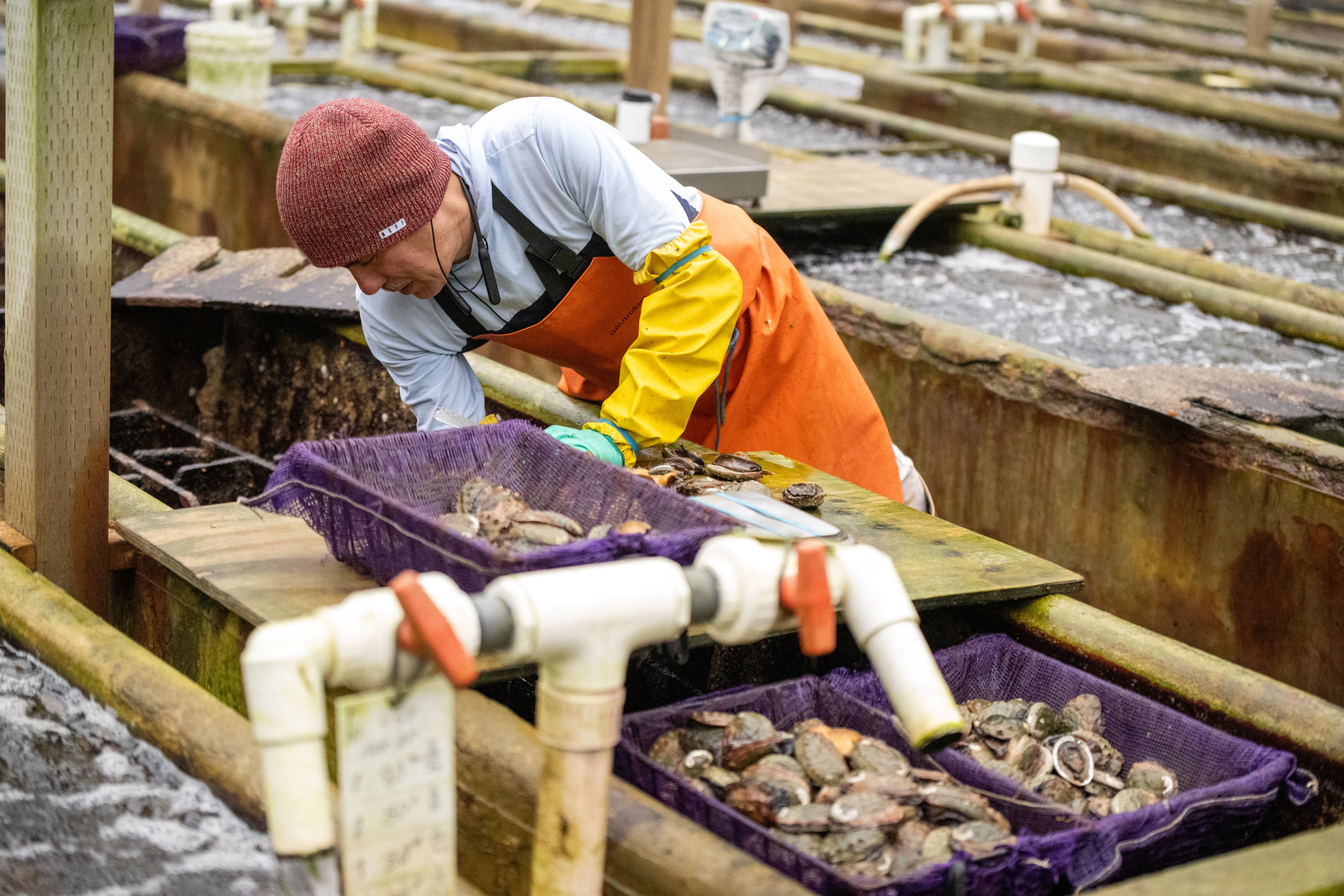
Several species of shellfish and seaweed are grown onshore in tanks. The style and configuration of the tanks vary with the species being grown.
Abalone: Farmed red abalone begin their lives inside a hatchery facility. Eggs are fertilized in small, often circular tanks filled with seawater. The seawater is pumped from the ocean, filtered and disinfected to remove organisms that are harmful to larval abalone. Once hatched, the abalone swim in the tanks for about one week. When they are ready to settle to the tank bottom, the abalone are moved into larger circular or rectangular indoor tanks or troughs. The young abalone eat microalgae grown on the tank surfaces. Substrates like concrete, plastic plates or ceramic tiles are also added to the tanks to provide more surfaces for microalgae to grow. The additional substrates also increase the amount of abalone habitat available in the tank.

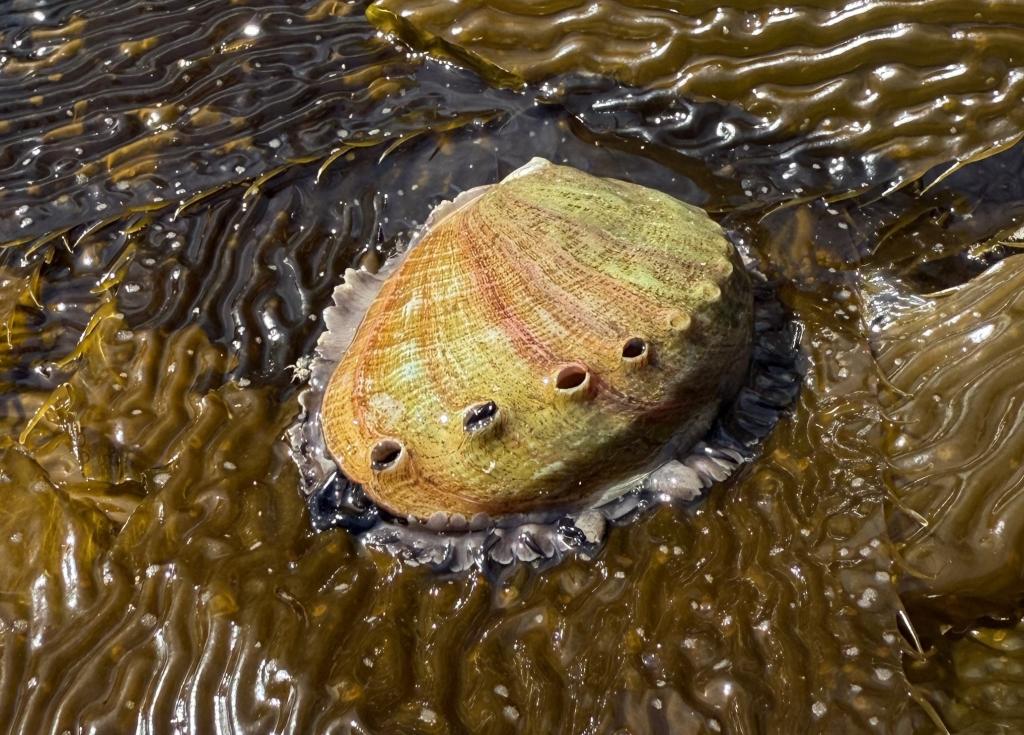
When the abalone reach about a half inch to an inch in shell length, they are moved outside the hatchery into larger tanks, typically concrete rectangular tanks or plastic troughs. These tanks are filled with seawater that is pumped directly from the ocean. Unlike in the hatchery, the seawater is not treated and minimally filtered because the older abalone are less susceptible to other organisms. Air is bubbled in the tanks to keep the seawater well oxygenated. The abalone eat kelp and other seaweeds that are added to the tanks each week. The tanks are emptied of seawater, cleaned and refilled on a certain schedule, often once a week.
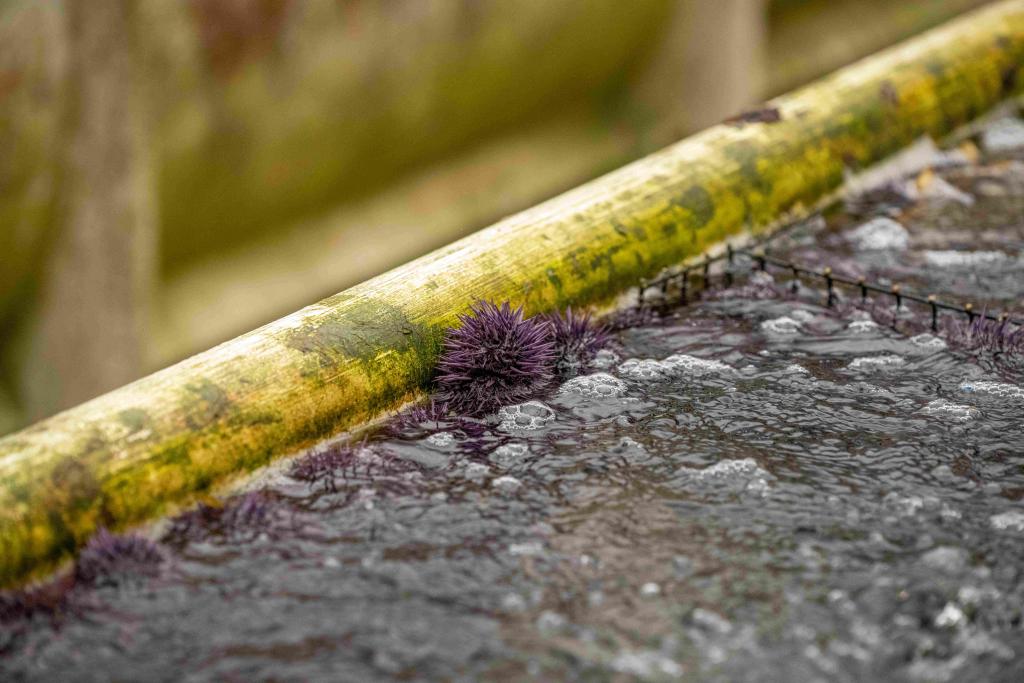
Sea urchins: Purple sea urchins are “ranched” in tanks on land. They are taken from the ocean and put into tanks to improve their growth and quality for human consumption. The tanks can be a variety of shapes and sizes, but they are often rectangular like those used to farm abalone. They may also include substrates like concrete or plastic plates that provide more surfaces for sea urchin habitat. The tanks are filled with continuously flowing seawater that is pumped through a pipeline from the ocean to the farm. Air is bubbled in the tanks to keep the seawater well oxygenated while the sea urchins grow and fatten up. The urchins eat kelp and other seaweeds that are added to the tanks each week. The tanks are emptied, flushed clean and refilled on a certain schedule, often once a week.
Seaweeds: Seaweeds like Pacific dulse and ogo (red seaweed) are grown on land in round fiberglass or plastic tanks. The tanks are filled with continuously flowing seawater that is pumped through a pipeline from the ocean to the farm. Air is bubbled from the bottom of the tank to keep the seaweeds suspended and tumbling. This tumbling action ensures that all parts of the seaweed are exposed to light and nutrients, essential for seaweed to survive and grow.
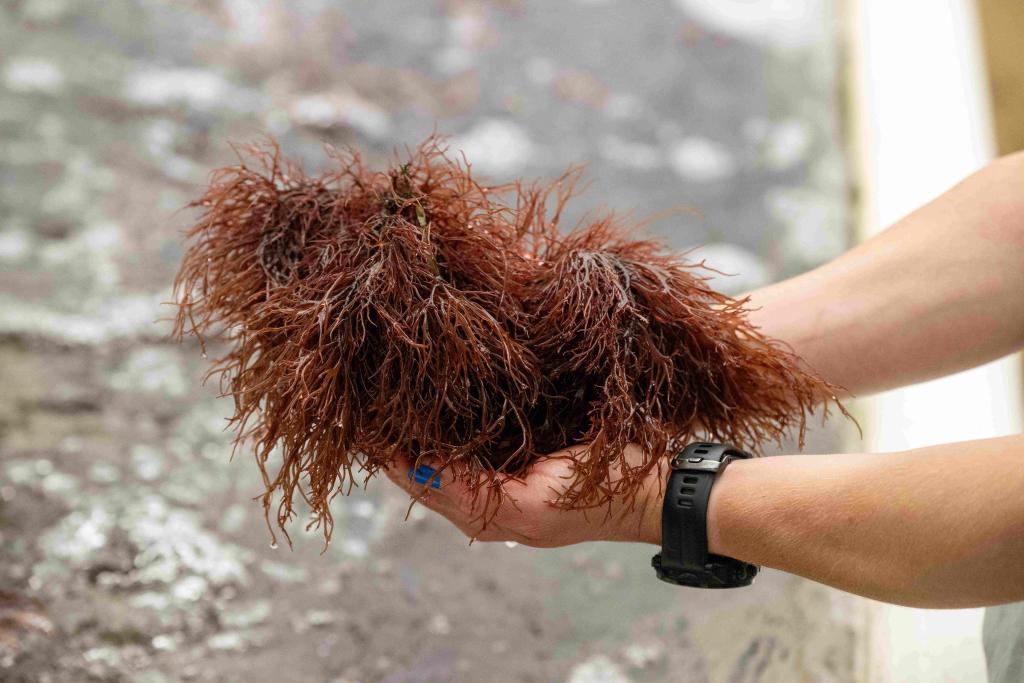
Image captions and credits
1. Onshore red abalone farm in Goleta, California; Chris Peterson
2. Juvenile red abalone on tile culture substrate at abalone farm in Goleta, California; Andie Van Horn
3. Adult red abalone on kelp at abalone farm in Goleta, California; Andie Van Horn
4. Purple sea urchin ranching at onshore abalone farm in Goleta, California; Chris Peterson
5. Ogo (red seaweed) culture at onshore abalone farm in Goleta, California; Chris Peterson